
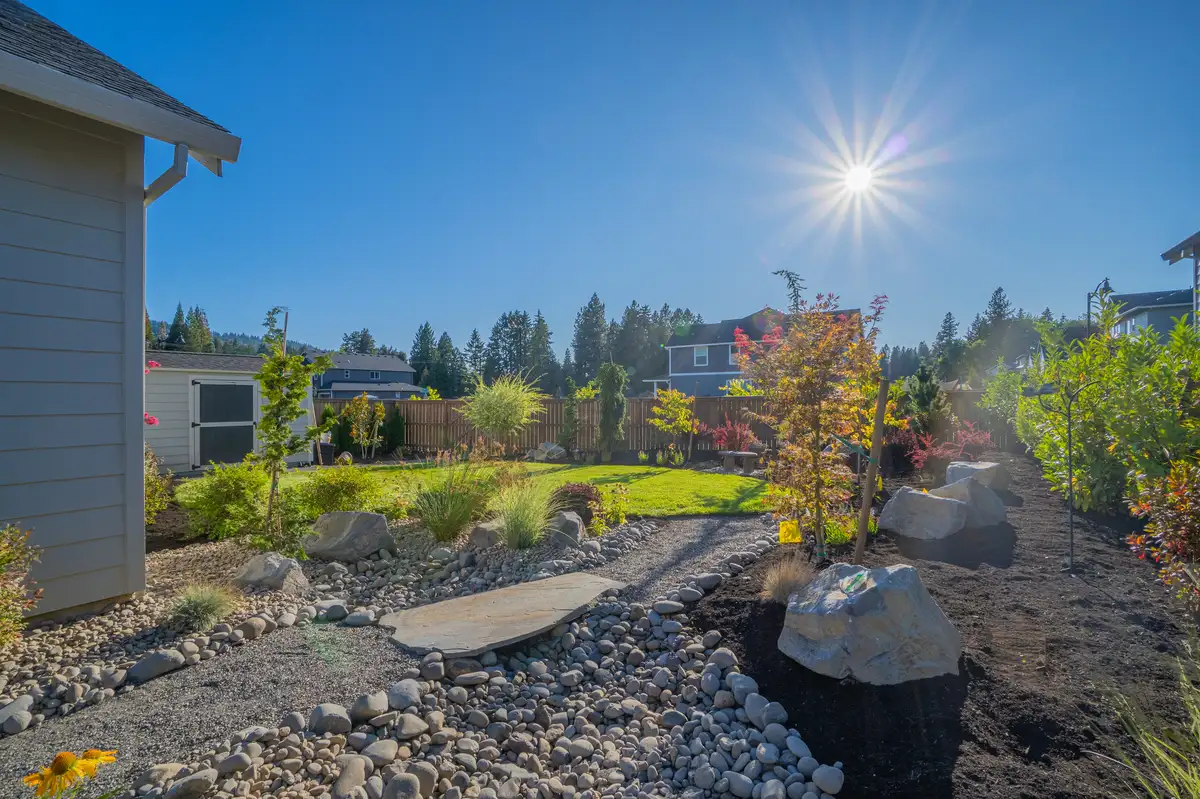
The most useful questions to ask before booking landscaping in Wilsonville are the ones that reveal what the estimate actually includes. A finished lawn, bed, path, patio, or wall is only the visible layer. The plan also needs to account for removal, soil or base preparation, grade, water movement, access, cleanup, and the maintenance that begins after installation.
Use the questions below to compare proposals for the same result—not two different scopes that happen to share the word “landscaping.” For a property-specific conversation, review CreekView’s landscaping service in Wilsonville, OR and the broader Wilsonville service area.
Compare the answer, not just the number
A lower total can reflect less removal, thinner preparation, different materials, fewer cleanup responsibilities, or a narrower work area. Before comparing price, make sure each proposal solves the same problem and assigns the same responsibilities.
1. What result and work area are we pricing?
Start with the intended use of the space. You may want a lawn that handles play, a drier route to the side gate, cleaner planting beds, easier mowing, a level seating area, or a safer transition across a slope. Name the priority and ask the contractor to show which part of the scope delivers it.
Then define the boundaries. Confirm what stays, what is removed, where new work stops, and how it will meet the driveway, fence, patio, foundation, neighboring grade, or existing plants. This is one of the simplest ways to avoid comparing an isolated material price with a complete installation.
2. Should I judge the proposal by an hourly rate?
An hourly figure—whether it is $100 or another amount—does not tell you enough on its own. Crew size, equipment, hauling, disposal, access, preparation, and supervision all affect how much work is completed in an hour. A rate that looks higher may cover resources that are separate line items elsewhere; a lower rate may apply to a narrower task.
Ask for the total written scope, the materials and quantities that can be identified in advance, the assumptions behind the estimate, and the process for approving changes. That gives you a more useful comparison than trying to decide whether one hourly number is universally high or low.
3. Which preparation work is driving the investment?
There is no single “most expensive part” of every landscape project. On one property, access and hauling may dominate. On another, excavation, grading, base preparation, retaining work, or material quantities may carry more of the cost. The visible finish is not always the biggest line of work.
Ask what must happen before installation and why. For example, paver installation depends on excavation, a stable base, finished elevations, and edge restraint. Turf installation still needs appropriate ground preparation and drainage planning. A retaining wall can affect nearby grades, access, and how the lawn or beds are finished. CreekView’s broader landscaping services can bring connected work into one sequence when it is included in the agreed scope.
4. How does the plan handle Wilsonville’s wet-season conditions?
A summer visit can reveal sun exposure, dry or compacted soil, worn traffic routes, and irrigation gaps. It may not show where water sits after repeated rain. Tell the contractor where runoff crosses the yard, mulch washes, lawn stays soft, or downspouts discharge during wetter months.
Ask where water enters the project area, how new grades or surfaces will redirect it, and where it can safely go. Clay-heavy or compacted ground, low spots, walls, patios, and roof runoff can interact in ways that are easy to miss when each feature is considered separately. Wilsonville’s Natural Resources Process Guidelines also show that stormwater and protected resource review can matter for some development work. Requirements depend on the property and project, so confirm applicable rules rather than assuming every landscape job is treated the same.
5. Why does each material fit this location?
Ask for a location-specific explanation, not a blanket claim that one material is best. Sun and shade, foot traffic, pets, irrigation, drainage, slope, appearance, and available maintenance time can point to different choices in different parts of the same yard.
Also compare what the materials will need after installation. New lawn and plants may need establishment care. Mulch settles and needs periodic refreshing. Turf and pavers need routine cleaning and attention to edges or drainage paths. If your main goal is tidier beds, compare the project with mulch installation; if it is recurring mowing and edging, review the actual scope of lawn care.
6. What site constraints could change the plan?
Confirm how crews, equipment, and materials will reach the work area. Narrow gates, steps, fences, steep grades, limited staging space, and wet-season access can affect labor, equipment choices, hauling, and schedule. Ask where materials will be stored and how existing surfaces or plants will be protected.
Utilities, easements, HOA rules, natural resource areas, and certain grading, drainage, or structural work may also call for an early check. Ask who is responsible for confirming requirements and whether the answer is needed before the estimate can be finalized. If the work will be phased, confirm that the first phase preserves access and finished elevations for what comes next.
7. What should be clear in writing before I book?
The estimate should identify the work areas, removal, preparation, materials, installation, cleanup, exclusions, homeowner responsibilities, and how changes will be approved. If a detail was important during the walkthrough, make sure it appears in the written scope instead of relying on memory.
Ask what the handoff includes, what maintenance begins immediately, and which care instructions apply to the proposed materials. If a product warranty or contractor commitment is offered, ask what it covers, how long it applies, what could void it, and who handles a concern. The useful standard is clarity in writing—not an assumption that every material or service carries the same coverage.
A quick proposal comparison
- Same work areas and intended result
- Same removal, preparation, and cleanup responsibilities
- Comparable material specifications and quantities
- Clear access, staging, exclusions, and change process
- Written handoff, care, and any offered coverage
Wilsonville landscaping FAQ
What are common landscaping mistakes new homeowners make?
Common mistakes include choosing finishes before defining how the yard will be used, overlooking drainage and access, comparing estimates with different preparation work, and leaving maintenance expectations unclear. A property walkthrough should connect the visible materials to the work beneath them and the care they will need.
Is $100 an hour too much for landscape work?
An hourly figure alone does not show whether a proposal is a good value. Crew size, equipment, hauling, site access, preparation, materials, and what is included all affect cost. Compare the total written scope, exclusions, and expected result rather than judging one hourly number by itself.
What is usually the most expensive part of landscaping?
There is no single costliest item for every yard. Excavation, grading, hauling, base preparation, access constraints, retaining work, and material quantities can outweigh the visible finish. A property-specific estimate should separate enough of the scope to show what is driving the investment.
What landscaping challenges matter in Wilsonville, Oregon?
Water movement, low spots, compacted or clay-heavy ground, wet-season access, summer exposure, and connections to downspouts, lawns, patios, walls, and neighboring areas can all affect a Wilsonville plan. Requirements may also depend on the property and the type of work.
What should a landscaping estimate include?
A useful estimate should identify the work areas, removal and preparation, materials, installation, cleanup, exclusions, homeowner responsibilities, and how changes will be approved. Ask for any care instructions, product details, or commitments that affect your decision to be clear in writing.
Discuss your Wilsonville property with CreekView
CreekView bases each estimate on a property visit, project goals, access, grade, drainage needs, and material choices so the proposed scope is specific to the yard. Review Wilsonville landscaping options, then contact CreekView Landscape or call (971) 983-6455 to request a free estimate.