
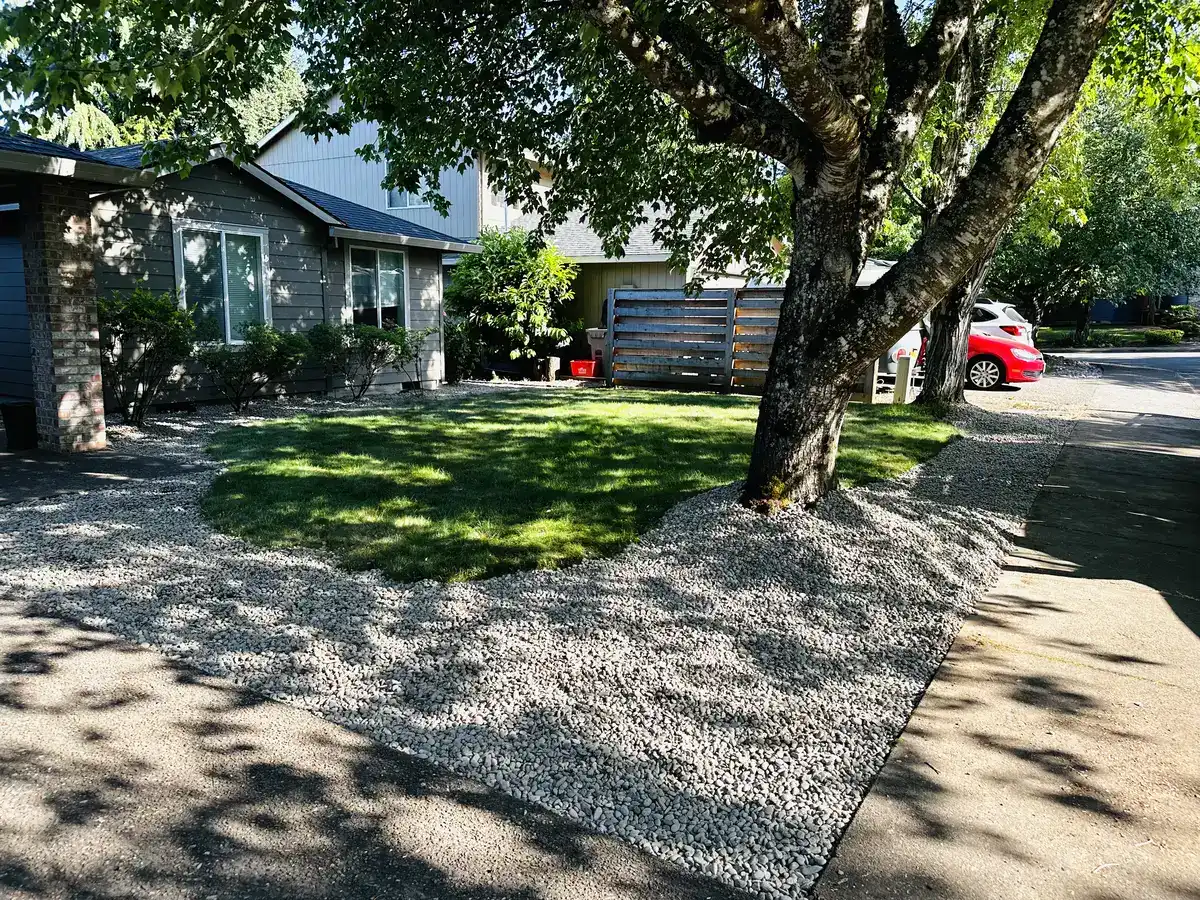
Good landscaping questions turn a broad idea into a property-specific plan. Before booking landscaping in Wilsonville, OR, define what needs to change, show how the yard behaves in wet and dry weather, and compare what each proposal includes below the visible finish. Those details make it easier to tell whether two estimates describe the same work.
This guide follows the order in which decisions are usually most useful: first the outcome, then the property, then materials and maintenance, and finally the written scope. You can also review CreekView’s page for landscaping in Wilsonville, OR and its broader Wilsonville service area before requesting an estimate.
Bring a three-part yard brief
- Priorities: the one problem to solve first and how you want to use the area
- Property evidence: photos of pooling, runoff, struggling lawn, erosion, or muddy routes
- Practical limits: maintenance preferences, access, budget priorities, and features that must remain
1. What result matters more than the list of materials?
Begin with the change you want to feel or use: a firm route to the gate, a lawn area that suits daily play, a cleaner transition between a patio and planting bed, or less time spent maintaining a difficult slope. A clear outcome gives every later material choice a job to do.
It also helps keep the scope focused. “Replace the muddy side-yard route with a stable, manageable surface” is more useful than choosing gravel, pavers, or turf before grade, runoff, traffic, and upkeep have been discussed. Bring a short priority list and identify what would make the project successful six months after installation.
2. What wet-weather evidence should the plan account for?
A September walkthrough may show dry ground where water collects during Wilsonville’s wetter months. Save photos or short notes about soft lawn, washed mulch, standing water, roof runoff, or erosion. Mark downspouts, low spots, compacted routes, and places where water crosses from one part of the yard to another.
Ask how the finished grades and connected surfaces will affect that movement. The City of Wilsonville’s stormwater information explains why runoff is a property and community consideration. The answer for a specific yard still depends on its conditions and the proposed scope.
3. Which parts of the yard need one coordinated plan?
A lawn, bed, path, patio, wall, and turf area may look like separate improvements, but they meet at shared edges and elevations. A new hard surface can change runoff. A retaining wall changes how nearby lawn, mulch, steps, or drainage should finish. Equipment access for future work can also disappear once the first phase is complete.
Ask what should be designed or sequenced together even if the work will be phased. CreekView can coordinate landscaping with turf, pavers, retaining walls, mulch, lawn areas, and cleanup when those services are part of the agreed project. The goal is to avoid solving one area in a way that creates rework in the next.
4. What preparation will be hidden when the project is finished?
The finished lawn, bed, paver surface, or turf is only the visible layer. Ask what removal, excavation, hauling, grading, soil preparation, base work, compaction, edging, and disposal are included. Difficult access, steep grades, or the need to protect existing surfaces can affect the work before new materials arrive.
This is why proposal totals are more useful when the scope is detailed. Two estimates can show similar finish materials while allowing very different amounts of preparation. Before comparing prices, confirm that removal, prep, quantities, installation, transitions, and cleanup are being compared on the same basis.
5. Why does each material fit this location and level of upkeep?
Ask for the reason behind each recommendation. Natural lawn, artificial turf, mulch, gravel, plants, and pavers respond differently to shade, foot traffic, drainage, irrigation, pets, and seasonal care. “Low maintenance” is not one universal condition; each option has cleaning, renewal, repair, or establishment needs.
Compare materials by the same questions: How will this area be used? What water and preparation does it need? How does it meet the surrounding grade? What upkeep remains with the homeowner? What happens if a section needs repair later? Those answers are more useful than selecting from appearance alone.
6. What access, property, or approval questions need an answer?
Identify gate widths, steps, slopes, overhead lines, utilities, irrigation, easements, material staging, and surfaces that need protection. Ask how crews and equipment will reach the work area and whether access assumptions are included in the proposal. A material that works in an open front yard may require a different installation plan in a tight side yard.
HOA requirements, protected-resource areas, utilities, and city review can also affect some projects. Not every landscaping scope has the same requirements. Ask what applies to the property, who will verify it, and when the answer is needed so that booking does not rest on a blanket assumption.
7. What must be clear in writing before booking?
The proposal should identify work areas, removal, preparation, materials, installation, access assumptions, cleanup, exclusions, homeowner responsibilities, and immediate aftercare. It should also explain how changes are approved if site conditions or requested work change after the project begins.
For a one-time installation, do not assume recurring care is included. For lawn care, confirm tasks, visit frequency, seasonal work, materials, disposal, and exclusions. If any product or contractor commitment is offered, ask for the actual terms in writing rather than relying on a general impression.
A useful proposal lets you trace every decision
You should be able to connect the stated yard problem to the preparation, recommended material, finished transition, maintenance expectation, and price. If one of those links is unclear, ask before booking. A property-specific scope is easier to compare and easier to use as a shared reference during the work.
Wilsonville landscaping FAQ
How do I compare landscapers in Wilsonville, Oregon?
Compare property-specific recommendations and written scopes, not only totals. Look at how each proposal handles drainage, preparation, materials, access, cleanup, aftercare, exclusions, and changes. Confirm any credentials or approvals that apply to the work before booking.
What should I show a landscaper during a Wilsonville property visit?
Show where water collects, lawn struggles, mulch moves, slopes erode, or routes become muddy. Photos from wet weather are useful when the walkthrough happens during a dry period. Also identify gates, utilities, downspouts, irrigation, surfaces to protect, and features that will remain.
What should a landscaping proposal include before I book?
A useful proposal identifies work areas, removal, preparation, materials, installation, access assumptions, cleanup, homeowner responsibilities, exclusions, aftercare, and how changes are approved. Product or contractor commitments should be provided in writing when offered.
Is landscaping the same as recurring lawn care?
No. Landscaping can include one-time construction or renovation work such as grading, soil preparation, sod, planting, mulch, turf, pavers, retaining walls, or cleanup. Recurring lawn care follows a service schedule and should list the tasks and frequency separately.
Should every yard improvement be completed in one phase?
Not necessarily. Phasing can work when future grades, drainage paths, edges, utilities, and equipment access are considered before the first phase begins. Ask which improvements should be coordinated now and which can wait without reopening completed areas.
Turn your yard brief into a property-specific estimate
Tell CreekView where the property is, what is not working, which areas you want to improve, and what level of maintenance fits your household. Contact CreekView Landscape or call (971) 983-6455 to request a landscaping estimate for your Wilsonville property.